Why is red a popular color for Chinese furniture? The answer begins with symbolism, but it does not end there. In Chinese visual culture, red often suggests happiness, prosperity, protection, and celebration. These meanings appear clearly on wedding cabinets, lacquered chests, altar tables, and carved wooden screens. A red cabinet can brighten a dim interior, yet its deeper message may concern family continuity rather than simple decoration.
Chinese furniture historian Wang Shixiang is widely associated with this observation: “Red is not merely a color; it carries wishes for prosperity and happiness.” His scholarship helps place red furniture within China’s long craft tradition, where lacquer, wood, ritual objects, and household customs overlap. Cinnabar-red surfaces also connect furniture with temples, festival decorations, and formal ceremonies. The effect can feel warm. Sometimes overwhelming.
Practical experience adds another layer. Red lacquer can hide minor surface variations, protect wood beneath several coatings, and create a durable, reflective finish. Its contrast with black wood, brass fittings, or pale walls makes furniture visually commanding. However, explaining every red piece through luck would be too neat. Regional customs, social status, historical period, and personal taste also shaped color choices. Some red furniture was ceremonial; other pieces were simply fashionable or commercially produced.
This introduction examines red furniture through history, symbolism, craftsmanship, and modern interiors. It also questions a common assumption: red is not automatically “traditional.” Its meaning changes when the cabinet moves from a family hall into a hotel, gallery, or contemporary apartment.
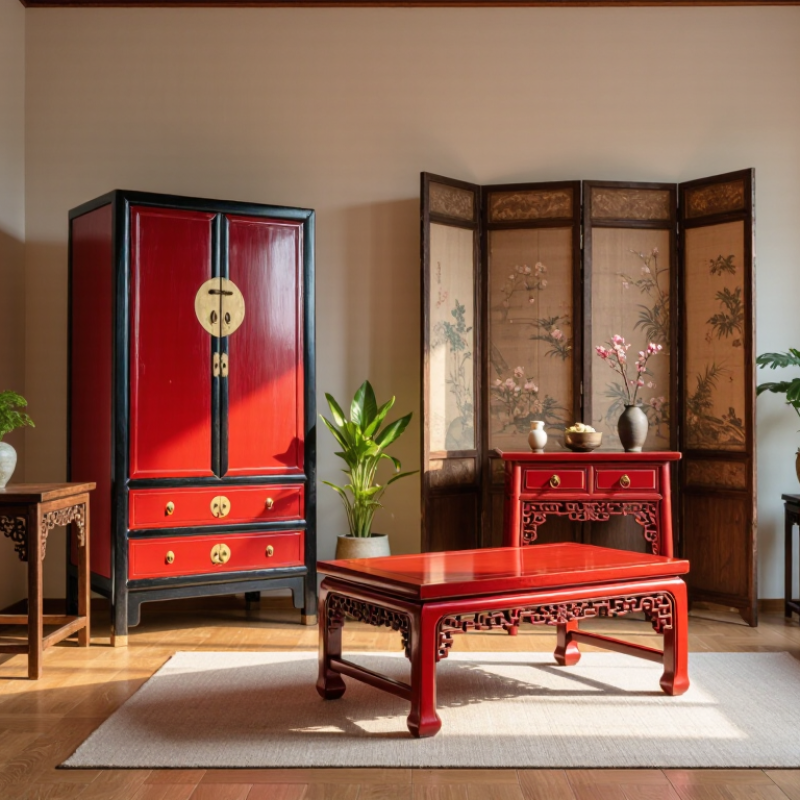
Why Is Red So Popular in Chinese Furniture?
Red in Chinese furniture carries layered meanings. It can suggest happiness, prosperity, celebration, and protection. However, its meaning changes with context, region, and personal memory. A red cabinet in a wedding room may feel joyful. The same cabinet in a quiet study may appear intense.
Its visual character comes from surface, light, and proportion. Lacquered red furniture often has a deep, reflective finish, while painted wood may look softer and warmer. Dark wooden frames can make red panels appear brighter. Brass fittings add small golden points against the strong color. Curved legs and carved details also soften red’s visual weight. Red is powerful, but not always comfortable. I once assumed brighter red was more traditional, yet muted red can feel more refined and historically sensitive.
Tips: Check the furniture under daylight and warm indoor light. Red can shift from orange to wine-dark tones. Look closely at the finish for even coverage, natural texture, and careful edge work. Ask about the wood, lacquer process, and restoration history. Reliable sellers should answer clearly, without exaggerated cultural claims. Also consider the surrounding room. A single red chest may create focus, while several red pieces can overwhelm a small space. That balance is easy to misjudge.
| Dimension | Cultural Meaning | Visual Characteristics | Typical Furniture Use |
|---|---|---|---|
| Good Fortune and Celebration | Red is traditionally associated with happiness, good fortune, celebration, and positive beginnings in Chinese culture. | Creates an immediate focal point and gives a room a warm, energetic, and festive atmosphere. | Commonly used on ceremonial chairs, cabinets, tables, screens, and furniture placed in reception or family gathering areas. |
| Festivals and Weddings | Red is strongly connected with major celebrations, especially Lunar New Year and traditional weddings. | Bright red surfaces appear lively and highly visible, particularly when combined with gold decoration. | Often selected for wedding furniture, seasonal decorative pieces, gift cabinets, and festive interior arrangements. |
| Protection and Auspiciousness | In traditional beliefs, red can express protection, vitality, and the wish to ward off misfortune. | Deep red finishes make furniture look visually substantial and symbolically powerful. | Used on entryway cabinets, decorative screens, altar tables, and furnishings positioned near important architectural or ceremonial spaces. |
| Imperial and Formal Associations | Historically, red appeared in palace architecture, official settings, religious spaces, and formal decorative arts, giving it a sense of dignity and authority. | Dark lacquered red can appear formal, dramatic, and refined rather than purely festive. | Appropriate for high-back chairs, formal cabinets, display furniture, carved panels, and traditional-style room settings. |
| Lacquer Tradition | Red has a long history in Chinese lacquerware, where repeated layers of lacquer could protect and decorate wood or other substrates. | Lacquer produces a smooth, reflective, saturated surface; carved or polished layers may reveal contrasting colors beneath. | Seen on lacquer cabinets, chests, tables, trays, screens, and decorative storage furniture. |
| Material and Pigment Sources | Traditional red finishes could be produced with mineral pigments, organic colorants, and later synthetic pigments, depending on period and technique. | Color ranges from vermilion and orange-red to oxblood, burgundy, and brownish crimson. | The chosen shade helps distinguish formal antique-inspired furniture from brighter contemporary decorative pieces. |
| Contrast with Gold | Red and gold are a widely recognized auspicious color pairing in Chinese decorative culture. | Gold highlights, gilded lines, and metallic motifs increase contrast and make carved details more noticeable. | Frequently applied to cabinet doors, chair backs, screens, table aprons, handles, borders, and ornamental motifs. |
| Contrast with Dark Wood | Red can coexist with the visual language of traditional wood furniture while adding a more expressive decorative layer. | Red lacquer contrasts strongly with dark brown, black, and reddish-brown wood tones, emphasizing silhouette and geometry. | Used on painted panels, drawer fronts, carved details, legs, frames, and mixed-material furniture. |
| Spatial Impact | Because red carries strong symbolic and emotional associations, it is often used intentionally rather than as a neutral background color. | Large red surfaces can make furniture feel warmer, closer, heavier, and more visually dominant within a room. | Best suited to statement pieces, accent furniture, focal walls, reception areas, dining spaces, and ceremonial interiors. |
| Contemporary Interpretation | Modern designers may retain red’s cultural associations while using it in more restrained or simplified forms. | Muted red, matte finishes, selective color blocking, and minimal ornament create a contemporary appearance. | Applied to modern cabinets, sideboards, dining chairs, occasional tables, shelving panels, and accent furniture. |
Red may suggest happiness, prosperity, celebration, protection, or vitality. Its meaning depends on context, region, and personal memory.
Red appeared in lacquerware, ritual objects, formal interiors, and ceremonial furniture. Costly pigments and careful finishing sometimes suggested status and ceremony.
No. Color alone cannot prove age, ownership, or social rank. That assumption is too simple.
Lacquer can create a deep, reflective surface with strong visual depth. Painted wood usually appears softer and warmer.
Dark frames, curved legs, carved details, and small brass fittings can balance the color. These elements break up the intense red surface.
Yes. Daylight may make red appear orange, while warm indoor light can create wine-dark tones. Check it at different times.
Look for even coverage, natural texture, careful edges, and signs of layered finishing. Ask about the wood, finishing process, and restoration history.
One red chest can create a clear focal point. Several pieces may overpower a small room, especially beside bright walls.
No. Muted red can appear more refined and historically sensitive. I once assumed the opposite.
Treat exaggerated claims carefully. Regional customs, household wealth, materials, and later repairs may have changed the original appearance.
Red has long held a special place in Chinese furniture because it combines strong visual appeal with deep cultural meaning. Bright red creates warmth, energy, and a sense of dignity, while darker red-brown tones give furniture a calm, traditional character. The color became prominent through China’s imperial history, ceremonial traditions, and the development of lacquer craftsmanship. Over time, red furniture came to represent happiness, prosperity, good fortune, protection, and celebration, making it especially meaningful in homes and formal spaces. Why is red a popular color for Chinese furniture? Its popularity comes from the balance between symbolic value and distinctive beauty.
Traditional red furniture is often made from carefully selected wood and finished with multiple layers of lacquer, producing a smooth, durable, and glowing surface. Skilled artisans may add carved details, painted patterns, or subtle decorative elements that enhance the furniture’s cultural character. Today, red furniture continues to appear in dining rooms, living areas, bedrooms, and contemporary interiors. Although modern designs may use simpler shapes and softer shades, the color still connects present-day furniture with China’s history, craftsmanship, and enduring visual traditions.

 ELDI Home