Chinese beds are more than sleeping furniture. Their carved surfaces can preserve family hopes, social values, and regional artistic traditions. A dragon may appear across a headboard, beneath a canopy, or beside clouds and waves. These details create a visual story around the sleeper.
What does the dragon carving on Chinese beds mean? In many traditional contexts, the dragon represents power, protection, prosperity, and connection with imperial culture. However, its meaning was not identical in every household. A five-clawed dragon could suggest imperial associations, while a simpler dragon might express strength or good fortune. The surrounding symbols matter. Pearls may represent wisdom, clouds may suggest the heavens, and waves may symbolize authority over water. The carving’s position also deserves attention.
Look closely.
The wood, tool marks, paint, and repaired sections can reveal the bed’s history. A museum catalogue, regional craft record, or specialist appraisal may provide stronger evidence than a decorative website. Dating a bed only by its dragon is risky, because later restorations can imitate older styles. I once treated symbolism as a fixed dictionary, but traditional furniture is less certain than that. Family identity, workshop habits, and local beliefs often changed the message. This guide examines those differences carefully, using visible design details and established Chinese furniture knowledge. It also acknowledges unanswered questions, because some carvings remain difficult to interpret without provenance. Understanding the dragon requires both cultural knowledge and patient observation. Tradition leaves clues, not always complete answers.
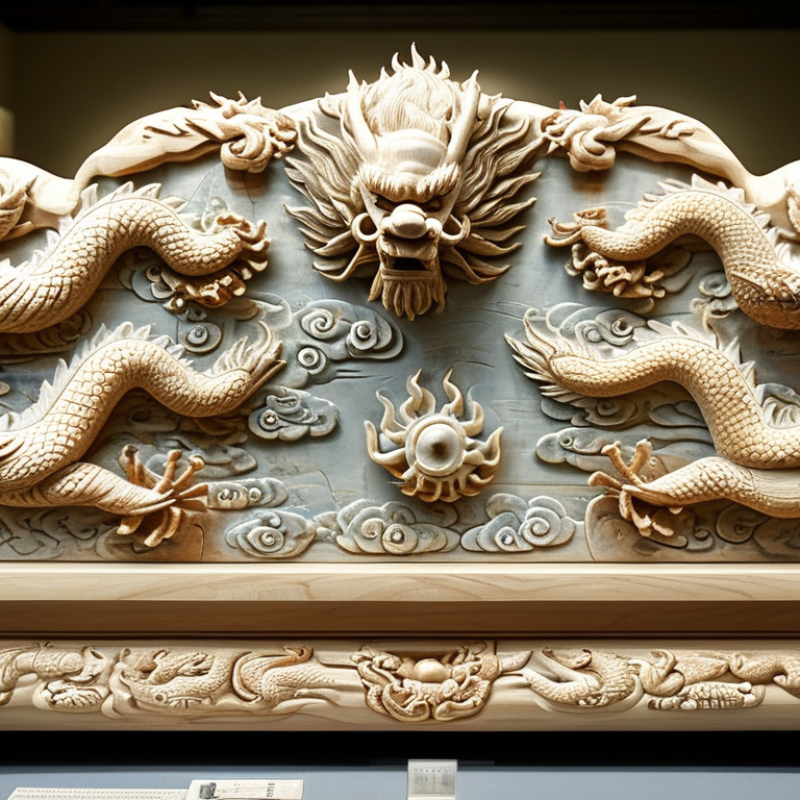
Dragon carvings on Chinese beds developed from a long tradition of sacred animal imagery. Early dragons symbolized rain, fertility, and protection. By the Ming and Qing periods, court culture connected the dragon with imperial authority. Wealthy families then adapted this image for canopy beds, bridal beds, and ancestral furniture. The carving often showed clouds, waves, pearls, or flaming ornaments. These details created a moving scene around the sleeper.
My first reading was too simple. I once treated every dragon as an imperial sign. That is unreliable. Local workshops changed claw numbers, cloud shapes, and body proportions. A five-clawed dragon may suggest court influence, but it cannot prove ownership or age. Conservation research also warns against dating wood furniture through decoration alone. Joinery, timber species, tool marks, lacquer layers, and repair traces matter together. The 2023 China National Furniture Association industry report placed Chinese furniture exports at about 55 billion US dollars. That scale explains why careful provenance is increasingly important for antique-looking reproductions and restored pieces.
Tips: Examine the bed in natural light. Look for consistent wear near handles and footboards. Check whether the carving follows the wood grain. Ask for conservation records, not only verbal claims. Read the dragon’s posture, but question your first impression. Historical interpretation is rarely perfect.
: Craftspeople often chose hardwood for strength and stable grain. Softer wood could support painted or lacquered surfaces. The wood matters.
Relief carving raised heads, claws, and clouds. Incised lines shaped scales, eyes, whiskers, and mane hair. Openwork carving let light pass through cloud patterns.
Some surfaces received lacquer, mineral pigments, or limited gilding. These finishes protected the wood and strengthened visual contrast. Dark red could look almost alive.
Not reliably. Five claws may suggest imperial association, but workshops copied popular symbols. Claw count alone cannot date a bed.
Photograph the headboard, canopy, footboard, joints, and hidden surfaces. Inspect deep corners for tool marks. Record repairs, dimensions, joinery, and wood grain.
Uneven depth and compressed fibers can support handwork. Aged dust in protected recesses may also help. They do not prove age.
Sharp machine grooves and uniform staining deserve careful review. Fresh abrasions may indicate later work. Skilled repairs can imitate older patterns surprisingly well.
A rising dragon may express power. Cloud-wrapped figures can suggest movement or protection. Meanings change across regions, periods, and households.
No. Appearance can mislead. Microscopic or laboratory evidence may be needed for a local species claim.
No. Combine carving analysis, material testing, joinery, and documented history. My first reading was wrong once. Doubt is useful here.
This article explores the historical origins and cultural significance of dragon carvings on Chinese beds, tracing how these designs developed within traditional Chinese furniture and interior culture. It explains why the dragon became an important decorative symbol associated with power, protection, good fortune, authority, and harmony. The article also considers how social status and regional traditions influenced the placement and style of dragon motifs on carved bed frames, panels, and canopies. A central question is: “What does the dragon carving on Chinese beds mean?” The answer depends on its historical context, artistic details, and relationship to other decorative elements.
Readers will learn to recognize common dragon poses, including coiled, flying, cloud-surrounded, and pearl-chasing forms, as well as features such as scales, claws, horns, waves, and auspicious clouds. The article further introduces traditional materials and techniques, including hardwood carving, relief work, openwork, polishing, and layered decoration. Finally, it offers a practical approach to identifying and interpreting bed dragons in 2026 by combining visual observation, craftsmanship, symbolism, and cultural context.

 ELDI Home