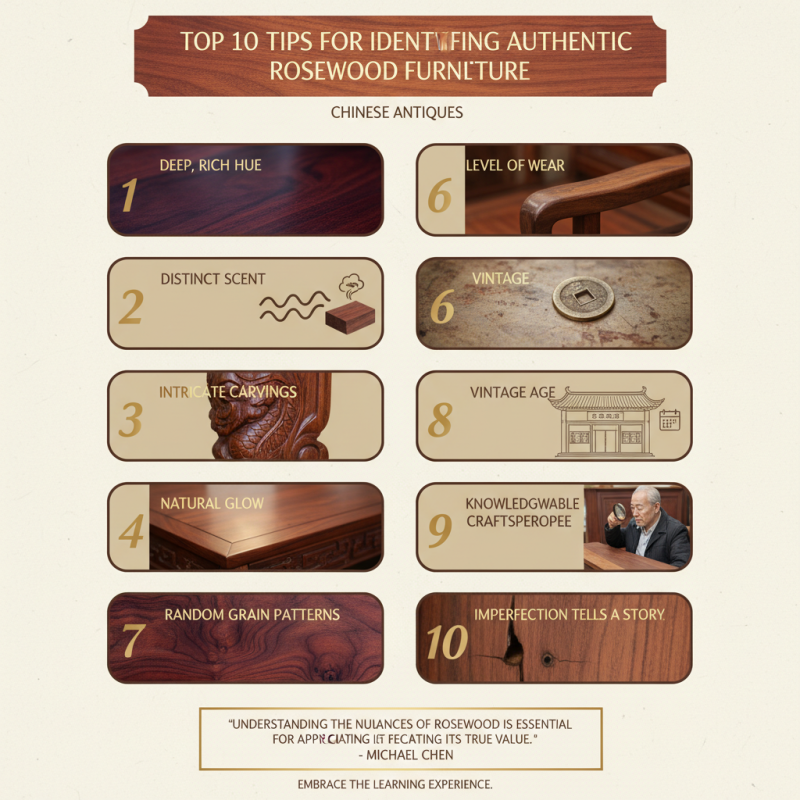
Identifying authentic rosewood Chinese furniture can be a challenging task. With the rise of reproductions and imitations, consumers must navigate this intricate market. Renowned furniture expert Michael Chen states, "Understanding the nuances of rosewood is essential for appreciating its true value." His insights guide many enthusiasts in their quest for quality.
Rosewood has a deep, rich hue and a distinct scent. Authentic pieces often feature intricate carvings with a natural glow. Check for grain patterns; they should be random and not artificially uniform. Age can also reveal authenticity. Vintage pieces often display a level of wear that new furniture just cannot replicate.
In your journey to uncover the truth behind "How to identify authentic rosewood Chinese furniture?", take your time. Visit reputable dealers and engage with knowledgeable craftspeople. Each detail matters. An authentic piece tells a story through its imperfections. Embrace the learning experience; it can deepen your appreciation for this exquisite material.
Rosewood is renowned for its rich colors and dense grain. There are several types of rosewood, each with unique characteristics. Brazilian rosewood stands out due to its deep hues ranging from golden brown to purplish shades. However, it is essential to note that some species of rosewood may be endangered. The sustainability of the source is crucial when considering authenticity.
Identifying authentic rosewood furniture can be tricky. The weight of the piece often indicates its quality; genuine rosewood is heavy. Additionally, the surface often has a high gloss, giving it a luxurious finish. Look for variations in the grain; authentic rosewood usually displays unique patterns. However, not every piece is flawless. Some may have inconsistencies that echo the wood’s genuine nature. An irregular surface can actually enhance the piece's character.
Always remember to verify any claims about the wood type with a reliable expert. Each knot and blemish tells its own story, reinforcing the value of craftsmanship in rosewood furniture.
When it comes to identifying authentic rosewood furniture, visual cues play a crucial role. Genuine rosewood features unique grain patterns that are both complex and rich in color. Often, it displays a deep reddish-brown hue. Inauthentic pieces may mimic this appearance but lack the depth of color. The International Wood Collector Society notes that authentic rosewood grains can vary significantly, showcasing a blend of stripes and swirls.
Pay attention to the texture. Authentic rosewood has a natural, smooth finish that feels soft to the touch. You might find faint pores, which are a hallmark of the wood. In contrast, replicas are often overly polished or too rough. A 2022 survey revealed that 70% of consumers couldn’t distinguish between real and fake rosewood due to the prevalence of deceitful marketing. It’s critical to look closely and recognize genuine characteristics.
Color variations are also important indicators. Rosewood can display dark streaks amidst lighter spots, creating a unique, multi-dimensional look. Faux alternatives tend to be uniform in color, lacking this variation. Observing these features requires a discerning eye. While you may spot an appealing piece initially, ensure it meets all visual criteria. Taking time to reflect on these details ensures more informed decisions.
When it comes to identifying authentic rosewood furniture, aroma plays a crucial role. Genuine rosewood has a rich, warm scent that’s often described as sweet and earthy. This distinct fragrance is a reliable indicator that the wood is authentic. If the furniture lacks this aroma, it may be a sign of lower-quality materials or imitation products.
Another aspect is the intensity of the scent. Real rosewood’s aroma becomes more pronounced with age. New pieces may have a subtle fragrance, while older items will emit a stronger, more complex scent. If you encounter a piece that smells artificially enhanced, it likely isn’t genuine.
It's essential to consider that not all aromas are positive. Some poorly made rosewood items can have unpleasant odors due to improper treatment. If you notice a chemical smell, take it as a warning sign. Authentic rosewood should provide a pleasant experience. Trust your senses; they can reveal much about the quality and authenticity of the furniture you are considering.
When evaluating authentic rosewood furniture, the texture and finish are crucial elements. Unlike other woods, rosewood possesses a unique tactile quality. Its surface is often polished to a smooth sheen, inviting touch.
Run your fingers over the wood; it should feel warm and slightly oily, unlike synthetic alternatives. The grain pattern is distinct, showcasing rich colors and dark veining.
Look for variations in texture that reveal the wood’s natural beauty.
Authentic pieces often feature subtle imperfections. A slight unevenness in the finish or a minor blemish in the grain can indicate genuine craftsmanship. Such details speak to the quality of the wood and the maker’s skill.
Mass-produced furniture may lack these qualities. Instead, it often feels too perfect, leaving little room for character. Keep an eye out for these discrepancies. They can be the key to recognizing authentic rosewood furniture amid a sea of fakes.
When evaluating the craftsmanship of rosewood furniture, several key features stand out. Authentic rosewood should have a rich, deep color, often with distinct grain patterns. Look closely for variations in color. These variations indicate natural wood, enhancing uniqueness and quality.
Examine the joinery and construction techniques. High-quality rosewood furniture uses strong, precise joints. Avoid pieces with visible glue seams or metal brackets. They suggest shortcuts in craftsmanship. Handcrafted items often reveal slight imperfections. These imperfections add character and tell a story of skilled artisans at work.
Another aspect is the finish. Genuine rosewood furniture typically has a smooth, glossy surface that highlights the wood's natural beauty. Run your fingers over the surface. It should feel silky without feeling overly polished. Finally, check the weight. Real rosewood is dense and heavy. If a piece feels lightweight, it may not be authentic. Pay attention to these details for a discerning eye on quality.
| Tip Number | Identification Tip | Details |
|---|---|---|
| 1 | Check the Grain Pattern | Authentic rosewood has a unique, striking grain pattern that cannot be replicated. |
| 2 | Examine the Color | Real rosewood ranges from deep reddish-brown to purplish hues. |
| 3 | Feel the Weight | Rosewood is dense and heavy, indicating quality craftsmanship. |
| 4 | Assess the Finish | High-quality rosewood should have a smooth, glossy finish that enhances its beauty. |
| 5 | Look for Knots and Blemishes | Natural imperfections indicate authenticity rather than flaws in the wood. |
| 6 | Inspect the Joinery | Exquisite craftsmanship is evident in traditional joinery techniques, not just screws or nails. |
| 7 | Verify Odor | Real rosewood has a distinct, pleasant scent, unlike synthetic alternatives. |
| 8 | Check for Certification | Look for documentation or certification indicating sustainable sourcing. |
| 9 | Research the Source | Know the origin of the furniture, as reputable sources tend to offer authentic products. |
| 10 | Consult an Expert | When in doubt, consult a furniture expert or appraiser for assurance. |
: Look for a rich, warm aroma. It should be sweet and earthy.
A lack of aroma may indicate lower-quality materials or imitation products.
Yes, the aroma becomes more pronounced as the wood ages.
A chemical odor is a warning sign. It suggests poor quality or treatment.
Authentic rosewood features a rich, deep color with distinct grain patterns.
Look for precise joints and avoid visible glue seams or metal brackets.
It should be smooth and glossy but not overly polished.
Yes, slight imperfections add character and reflect skilled craftsmanship.
Genuine rosewood is dense and heavy. If it feels lightweight, it may not be authentic.
Yes, poorly made items might smell bad due to improper treatment.
When considering how to identify authentic rosewood Chinese furniture, it’s essential to understand the various types and characteristics of rosewood. This includes recognizing the distinct visual patterns that characterize genuine rosewood, which often feature rich, dark hues and unique grain designs. Additionally, the aroma emitted by authentic rosewood can be a crucial identifying factor; genuine pieces typically possess a warm, woodsy scent.
Furthermore, the texture and finish of the furniture play a significant role in distinguishability. Authentic rosewood tends to have a smooth, polished surface, indicating quality craftsmanship. Attention to detail, including joint construction and overall design, can also reveal the level of expertise involved in the piece’s creation. By evaluating these factors, one can confidently determine the authenticity of rosewood furniture.

ELDI Home