A Chinese tea table is more than a surface for a teapot. Its height shapes the reach, posture, and quiet rhythm of a tea gathering. So, What is the standard height of a Chinese tea table? There is no single measurement for every style. Many low tables sit around 12 to 18 inches high, while designs for chairs or taller seating may stand higher. The right fit depends on how you sit and where the cups will rest.
Design matters as much as the number. William Morris, the influential British designer, offered a useful principle: “Have nothing in your houses that you do not know to be useful, or believe to be beautiful.” A tea table should meet both tests. Picture a teapot near the center, small cups within easy reach, and enough clearance for knees beneath the edge. Even a beautiful table can feel awkward if guests must lean forward to pour.
This guide compares seven Chinese tea tables by style, materials, and practical use. It also explains how to judge height against floor cushions, chairs, and your own reach. Measurements are a starting point, not a promise of comfort. A few inches can change the experience. And yes, the “standard” answer can feel frustratingly flexible. That is worth remembering before choosing a table for a particular room or tea set.
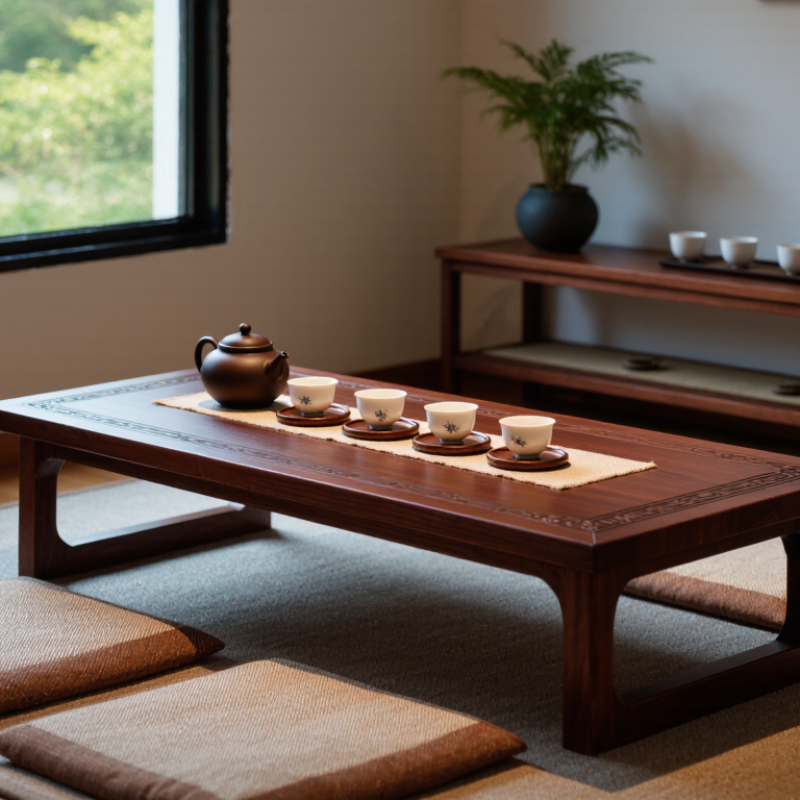
Chinese tea tables do not share one standard height. A low kang table sits near floor cushions, while a side table may rise beside a chair. A formal tea table often stands higher, giving guests room to pour without leaning too far. Height also depends on the tea-brewing method, vessel size, and whether people sit on cushions or chairs. A small gaiwan needs less reach than a tall kettle. The fit is personal, too.
Grand View Research estimated the global furniture market at USD 736.6 billion in 2023. That broad market figure does not set tea-table dimensions, but it reflects a varied furniture sector. For a practical reference, ANSI/BIFMA X5.5-2021 addresses performance requirements for desk and table products; it does not define a universal Chinese tea-table height. A fixed “standard” can therefore mislead. Measure the seat and the tabletop together.
Tips: Sit as you would during a real tea session. Check that your forearms reach the surface comfortably, and that the kettle clears the table edge. For floor seating, test with the cushion you will actually use. A few centimeters matter. I would recheck the height after choosing the chairs; it is easy to judge the table alone and get it slightly wrong.
| Chinese Tea-Table Type | Typical Height | Approx. Height in Inches | Best Seating Arrangement | Main Characteristics | Why the Height Varies |
|---|---|---|---|---|---|
| Gongfu Tea Table | 28–40 cm | 11–16 in | Low stools, floor cushions, or short tea chairs | Compact surface designed for a gaiwan, teapot, fairness pitcher, cups, tea tray, and waste-water container. | Gongfu brewing uses several small vessels, so the table is kept low enough for close, controlled pouring and seated conversation. |
| Floor-Level Tea Table | 15–25 cm | 6–10 in | Floor cushions or kneeling seating | Very low, often simple in form, and suitable for informal tea drinking or traditional floor-based arrangements. | The height is coordinated with the floor seating position rather than with the height of a standard chair. |
| Standard Chinese Tea Coffee Table | 40–55 cm | 16–22 in | Low lounge chairs, sofas, or armchairs | A versatile rectangular or square table for tea service, snacks, conversation, and everyday living spaces. | Its proportions are usually matched to low seating; a taller sofa or armchair requires a higher table for comfortable reach. |
| Tea Tray Table | 35–50 cm | 14–20 in | Low chairs, benches, or a sofa | Features a removable tea tray or a recessed, water-resistant top that helps contain spills during brewing. | The table may be lower when the tray is used on a lap-height arrangement and higher when it functions as a sofa-side table. |
| Folding Tea Table | 30–50 cm | 12–20 in | Flexible seating, floor cushions, or occasional chairs | Lightweight and portable, with folding legs or a collapsible structure for storage and occasional tea service. | Portable designs cover both low floor use and temporary seating areas, so adjustable or varied fixed heights are common. |
| Round Tea Table | 45–60 cm | 18–24 in | Low lounge chairs or a compact seating circle | A circular tabletop encourages shared access and face-to-face conversation, with no sharp corners around the seating area. | The diameter, leg placement, and chair height affect the ideal elevation; larger round tables are often raised for easier reach. |
| High Tea Console Table | 65–75 cm | 26–30 in | Dining-height chairs, stools, or standing service | A taller, narrow table used for tea preparation, display, serving, or modern dining-style tea settings. | It is designed around upright seating or standing rather than traditional low seating, so its height approaches that of a dining table. |
No single height suits every user. Match the table to the compressed seat height. A useful starting range is 50–100 millimeters above the seat.
A table around 30–35 centimeters often works well. Measure the cushion after sitting on it. A soft cushion becomes noticeably lower.
Try a table between 40 and 45 centimeters. A 380-millimeter seat may pair with a 430–480-millimeter table. Test it before buying.
Sit upright and place a cup near the center. Keep your elbows relaxed and wrists nearly straight. Your shoulders should not lift.
A low table can make your arms feel cramped. A high table may strain your shoulders. Small height errors become obvious during long sessions.
Solid wood feels warm and stable. Stone resists heat and moisture but remains heavy. Bamboo is light, though its joints may loosen over time.
Yes, if portability matters. Check the hinges and leg joints carefully. Lightweight construction can wobble on uneven floors.
Function deserves equal attention. Check drainage, edge comfort, knee clearance, and stability. A beautiful table is disappointing when water collects underneath.
Build a cardboard mock-up at the intended height. Sit for several minutes and pour imaginary tea. It feels simple, but it reveals awkward proportions.
It is a useful guide, not a fixed law. Taller users may prefer more height. My own preference may be too low for others.
What is the standard height of a Chinese tea table? There is no single height that suits every style or setting. As a useful benchmark, many coffee tables stand about 40–46 cm high, but Chinese tea tables can be taller or lower depending on their form, purpose, and the way people sit around them. The most comfortable choice is usually guided by the seating: compare the tabletop with the seat height so guests can reach cups and utensils without straining.
Chinese tea tables vary in material, shape, and ceremony use, from compact surfaces for a small tea set to larger tables for shared gatherings. Before choosing one, consider how much room people need to sit, move, and serve tea, and make sure the tabletop can hold the full tea setup. Measuring the seating area and tea-set footprint helps balance comfort, practicality, and the table’s visual presence.

 ELDI Home