2026 Top Reasons to Choose Solid Wood Furniture from China?

Time:2026-09-17 Author:Sienna
0%

In 2026, solid wood furniture from China is attracting buyers who value durability, design flexibility, and controlled production. From oak dining tables to walnut bedroom cabinets, Chinese manufacturers offer products for homes, hotels, offices, and retail projects. Many factories combine traditional woodworking skills with modern cutting, drying, and finishing equipment. This balance can improve consistency without removing the natural character of timber.

Why do people prefer solid wood furniture from China? The answer often begins with practical value. China has extensive furniture clusters, skilled labor, and mature supply chains for wood, hardware, coatings, and packaging. Buyers can compare several designs, request custom dimensions, and discuss finishes directly with experienced suppliers. A carefully dried tabletop feels stable under daily use. A well-finished cabinet shows clean joints, smooth edges, and a richer grain.

Details matter.

However, quality is not automatic. Wood species, moisture control, joining methods, finishing standards, and factory management can vary greatly. Responsible buyers should review material descriptions, production samples, inspection records, and applicable certification requirements. Communication also deserves attention. A beautiful showroom photograph may not represent the final product perfectly. That is an important limitation.

This article explores the top reasons to choose Chinese solid wood furniture in 2026. It considers craftsmanship, customization, pricing, sustainability, export experience, and long-term reliability. The strongest decision is rarely based on price alone. It depends on evidence, transparent specifications, and a supplier willing to answer difficult questions. Good furniture should look appealing on delivery day and remain useful years later.
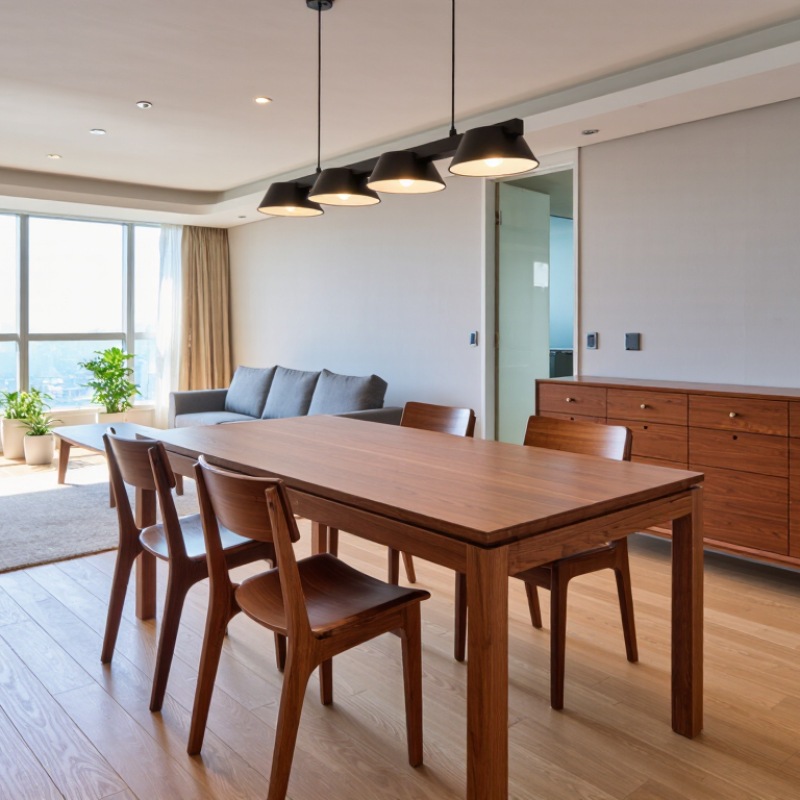
2026 Top Reasons to Choose Solid Wood Furniture from China?

Solid Wood Defined: Species, Grades, and Janka Hardness Ratings

2026 Top Reasons to Choose Solid Wood Furniture from China?

Solid wood means timber cut from a tree, not veneer over MDF or particleboard. Panels may contain joined boards, finger joints, or natural knots. Common species include oak, walnut, maple, pine, and rubberwood. Each creates a different visual and structural result. Oak often shows open grain and strong wear resistance. Walnut offers darker color but feels softer than maple.

Janka hardness measures the force needed to press a steel ball into wood. Red oak averages about 1,290 lbf, walnut about 1,010 lbf, maple about 1,450 lbf, and pine about 690 lbf. Figures vary by species, moisture, and test conditions. Hardness is not durability. Good joinery, kiln drying, and stable moisture control matter just as much. A factory’s “premium grade” may also lack a universal definition. Clear, select, and rustic grades can mean different things between suppliers.

Tips: Ask for the exact species, moisture range, board thickness, and grading photos. Request a Janka reference, but do not treat it as a guarantee. Check end grain, knot placement, and drawer joints. In real inspections, small color differences often appear after finishing. That is normal. Still, I would question unusually uniform grain; it may hide veneer or careful image selection. Documentation helps, but physical samples reveal more.

China’s Manufacturing Scale: Export Data and Global Supply Reach

2026 Top Reasons to Choose Solid Wood Furniture from China?

China’s manufacturing scale gives buyers broad access to solid wood furniture and coordinated export services. Public trade data consistently places China among the world’s leading furniture exporters. Its supply network reaches North America, Europe, the Middle East, Australia, and many emerging markets. This reach supports flexible order volumes, mixed container planning, and faster access to experienced packaging suppliers. Many factories also manage kiln drying, CNC cutting, sanding, finishing, and quality inspection in connected production systems. That integration can reduce delays between sampling and delivery.

Scale is not a guarantee. Wood grain can vary between batches, and finishing may look slightly different under showroom lighting. Reliable sourcing therefore requires more than attractive photographs. Buyers should review moisture readings, joint construction, coating specifications, packaging tests, and pre-shipment inspection records. Export experience also matters because ocean humidity, long transit times, and local installation conditions can affect furniture performance. Small details matter.

Tips: Request a material declaration, moisture standard, carton test result, and sample approval before placing a larger order. Compare the approved sample with mass-production photographs. Keep tolerances realistic for natural timber. A minor variation may be acceptable; structural movement is not. Ask how claims are handled across borders, too. That conversation is sometimes overlooked.

2026 Top Reasons to Choose Solid Wood Furniture from China

China’s manufacturing scale is reflected in the sustained global export value of furniture and related products.

China’s furniture exports reached an estimated US$73.8 billion in 2024. Although the HS 94 category includes furniture, bedding, lighting products and related parts—not solid wood furniture alone—the data illustrates China’s large production base, mature supply chain and broad international market reach. Values are rounded estimates based on UN Comtrade and ITC Trade Map reporting.

Kiln-Drying Quality: The 8–12% Moisture Target for Indoor Furniture

Kiln-Drying Quality: The 8–12% Moisture Target for Indoor Furniture

In 2026, solid wood furniture from China deserves attention for its controlled kiln-drying processes. Indoor wood should usually reach 8–12% moisture content before assembly. This range helps reduce later shrinking, swelling, joint opening, and surface cracking. The USDA Forest Products Laboratory’s Wood Handbook explains that wood continuously exchanges moisture with surrounding air. Heated interiors often bring wood near 6–8% equilibrium moisture content, while humid regions may require a slightly higher target.

Kiln drying is not simply “heating wood.” Operators gradually control temperature, humidity, and airflow through the core. They then test boards with calibrated moisture meters, checking several points rather than trusting one reading. European Standard EN 942:2007 also connects suitable moisture content with stable interior joinery and furniture performance. Practical inspection still matters. A reading can look acceptable while the center remains wetter.

The 8–12% target is useful, not magical.

Species, board thickness, shipping routes, and room climate change the result. Some workshops may rush the schedule, creating hidden stress that appears months later. I have learned that a dry surface does not prove a dry board. Buyers should request batch records, testing methods, and conditioning time before assembly. Clear evidence is more reliable than a polished product description.

Verified Durability: EN 16139, ISO 7170, and BIFMA Testing Standards

In 2026, solid wood furniture from China deserves attention when durability is verified, not merely advertised.

Real quality begins with controlled timber moisture, accurate joinery, and documented production checks.

A dining chair should remain steady after repeated loading, while a cabinet should resist shifting, loosening, and excessive deflection.

EN 16139 evaluates strength, durability, and safety for non-domestic seating. ISO 7170 focuses on storage furniture, including stability, construction strength, and repeated-use performance. BIFMA testing adds widely recognized office-furniture methods for seating, desks, and related products.

These standards create measurable evidence. Inspectors can review load levels, cycle counts, failure points, and sample conditions. That is more useful than a vague “heavy-duty” label.

Details matter.

A factory sample may show tight joints, clean sanding, and stable legs, yet production batches can vary. A test report is not magic.

Buyers should confirm the tested model, wood species, dimensions, hardware, and manufacturing date.

Independent inspections can check moisture readings, corner joints, surface defects, and packaging before shipment.

I have found that small issues, such as uneven feet or slightly loose fittings, often reveal process weaknesses. They should not be ignored.

Standards improve trust, but careful verification remains essential.

2026 Compliance: FSC Certification, EUDR Traceability, and ISO 9001 QA

2026 Top Reasons to Choose Solid Wood Furniture from China?

Compliance now matters as much as finish quality. FSC certification helps verify responsible forest management and controlled material sourcing. FSC reports more than 160 million hectares covered by certified forests worldwide. However, certification alone does not prove every finished product is compliant. Buyers should request valid certificates, product scopes, and matching supplier records.

EUDR traceability adds stricter evidence. Wood must be linked to its harvest location, legality documents, and deforestation-risk assessment. The European Commission requires due diligence information, including geolocation data, before covered products enter the European market. Chinese manufacturers that maintain batch codes, supplier declarations, GPS records, and production logs can respond more reliably. Small gaps remain dangerous. A polished document may still hide weak chain-of-custody controls.

ISO 9001 supports the quality system behind these records. The ISO Survey 2023 reported more than 1.2 million ISO 9001 certificates globally, showing its broad industrial acceptance. In practical factory audits, this framework should connect incoming timber checks with moisture testing, joint inspection, finishing control, and final packing photographs. FAO’s Global Forest Resources Assessment states that forests cover about 31% of the world’s land area. That resource deserves careful management. Mistakes still happen, especially when subcontractors change without notice. Experienced buyers should review current certificates, trace one sample batch, and test whether paperwork matches the actual wood.

FAQS

What does solid wood furniture mean?

Solid wood comes from timber cut directly from trees. It is not veneer placed over MDF or particleboard. Panels may include joined boards, finger joints, and natural knots.

Which wood species are commonly used?

Common species include oak, walnut, maple, pine, and rubberwood. Oak usually shows open grain and good wear resistance. Walnut appears darker, while maple is generally harder.

What does a Janka hardness rating measure?

The Janka test measures force needed to press a steel ball into wood. Higher ratings indicate greater resistance to indentation. Hardness alone does not guarantee long-term durability.

How different are common Janka ratings?

Red oak averages about 1,290 lbf. Walnut averages about 1,010 lbf. Maple reaches about 1,450 lbf, while pine averages about 690 lbf. Moisture, species variation, and testing conditions can change the figures.

Does a premium wood grade have a universal meaning?

No. “Premium grade” can mean different things between suppliers. Ask for the exact grading system, board thickness, and detailed grading photographs. The label sounds reassuring, but it may explain very little.

What should buyers inspect before ordering?

Request the species, moisture range, board thickness, and Janka reference. Inspect end grain, knot placement, drawer joints, and corner connections. Physical samples usually reveal more than polished product photographs.

Which standards help verify furniture durability?

EN 16139 evaluates strength, durability, and safety for non-domestic seating. ISO 7170 covers storage furniture stability and repeated-use performance. BIFMA testing includes office seating, desks, and related products. These standards provide measurable evidence.

Is a test report enough to guarantee production quality?

No. A report may cover only one model, material batch, or production date. Confirm the tested dimensions, wood species, hardware, and manufacturing date. Independent inspections can find loose fittings, uneven feet, moisture problems, and packaging damage.

Are small color differences after finishing a problem?

Small color changes are normal in natural wood. Grain also varies between boards. However, unusually uniform grain deserves questions. It may reflect veneer, selective photography, or careful image editing. I would not assume perfection means better quality.

Conclusion

Why do people prefer solid wood furniture from China? The answer lies in the combination of natural beauty, material variety, manufacturing capacity, and competitive value. Solid wood furniture can be made from different species and grades, each offering distinct grain patterns, strength, and Janka hardness ratings. China’s large-scale manufacturing network also supports efficient production and broad global supply, making it easier to source furniture for residential, hospitality, and commercial interiors.

Quality depends on more than appearance. Proper kiln-drying, typically reaching an indoor moisture target of 8–12%, helps reduce warping, cracking, and dimensional movement. Furniture tested to standards such as EN 16139, ISO 7170, and BIFMA can provide verified evidence of durability and functional performance. In 2026, responsible buyers should also consider FSC certification, EUDR-ready material traceability, and ISO 9001 quality systems, which support responsible sourcing, documented processes, and consistent production quality.

Sienna

Sienna

Sienna is a skilled marketing professional with a deep expertise in our company’s core products and services. With a passion for innovation and detail, she plays a pivotal role in crafting insightful blog posts that not only highlight the unique features of our offerings but also provide valuable......